
https://www.scribblemaps.com/maps/view/Fenagh/1jgwbhHfsS
Fenagh is home to some beautiful historic places of interest. You can search through the map above to find the location of these places.

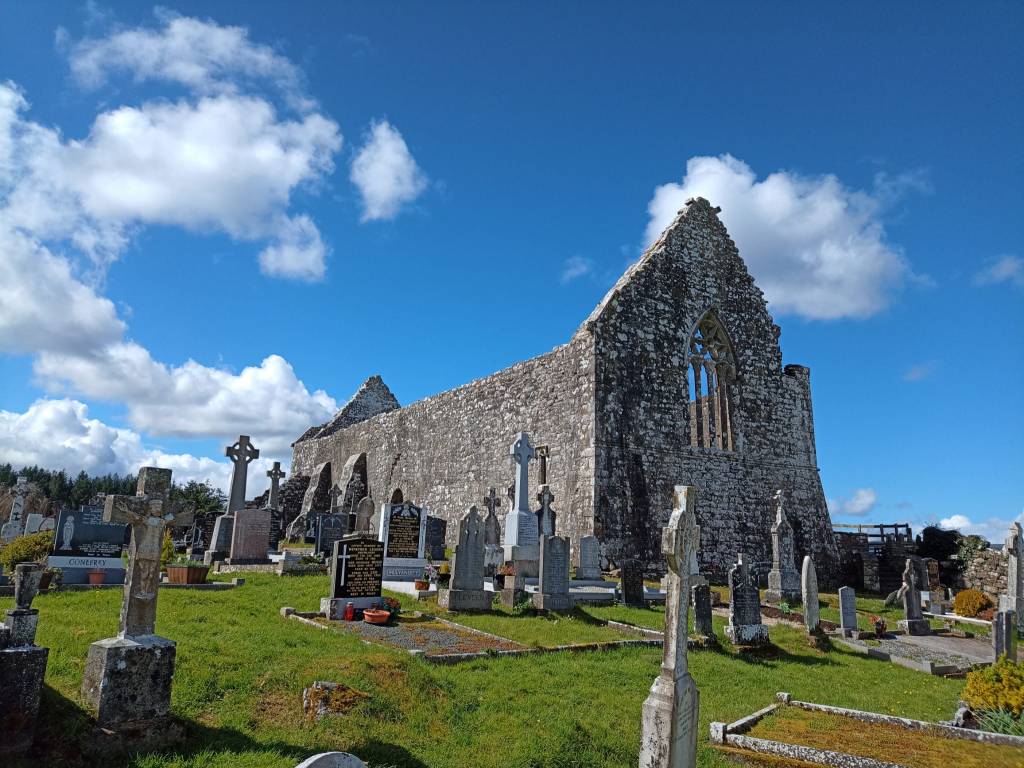

The site consists of two medieval churches. One lies within a system of circular earthworks and rock outcrops, and the other outside of the enclosure to the northeast. The existing remains consist of two roofless buildings and around these are the traces of many houses and a stone rampart. Based on their architectural features, the churches date to c.1300 CE. The churches may have been erected on the site of the previous church founded by St. Caillin.
The most striking feature of the abbey is the East window. It is fourteen feet in height and 6 foot 6 inches in greatest width. It consists of four lights separated by mullions and topped by a wheel with six spokes. Over it, on both the inside and outside of the building, there are hood mouldings. The mouldings on the outside are decorated with three human heads. The moulding on the inside is also decorated at the apex with a human head. Beneath this window stood the high alter of the old church.
You can visit the new abbey and walk around the site.
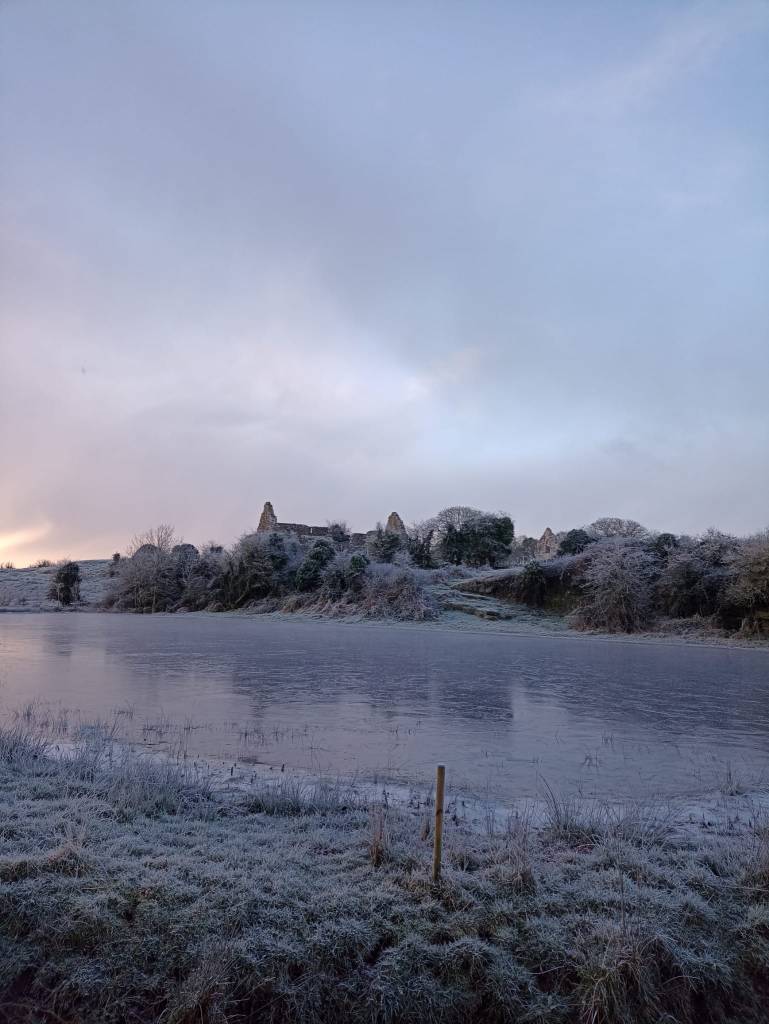

Fenagh Old Abbey is situated in a field very close to the new Abbey. It is thought to have been built around the 12th Century, on the site of an existing monastic settlement.
The Old Abbey is on private land and is not accessible, although works are underway to gain funding and access for a walkway around the abbey. Currently, the old abbey can be viewed from the Cloone road.
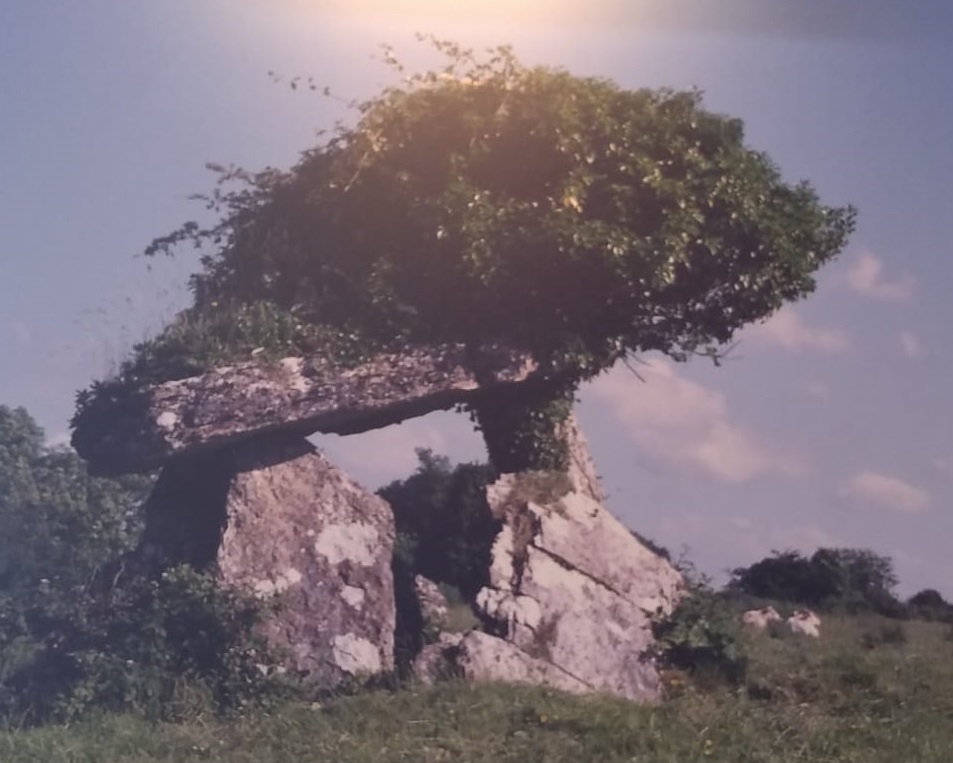
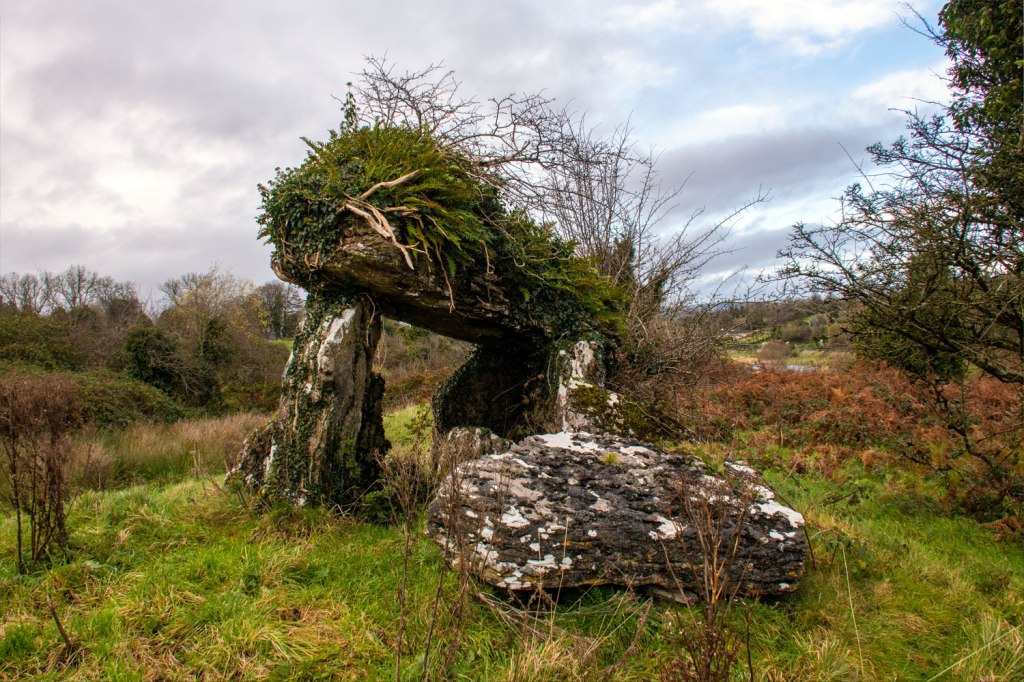

The Fenagh Dolmen dates back to c. 4000-2500 BCE. The monument is located in rolling arable land about a quarter of a mile northwest of Fenagh Village. It consists of the remains of a cairn in which the chamber stands at 3 metres inside the southern end. The entrance is between two portal stones set longitudinally and standing almost one metre apart. A large roof stone rests above the chamber.
The Dolmen is also known as a Cromlech (‘Dolmen’ in French) and is regarded as an ancient, pre-Christian burial ground. Legend has it that King Conall Gulban was buried here. He was one of the eight sons of Niall of the Nine Hostages and brother of Laoghaire, High King of Ireland at the time of St. Patrick.
The Dolmen is on private land and is not accessible. There is a point on the road towards Lough Reane that you can see the Dolmen from.
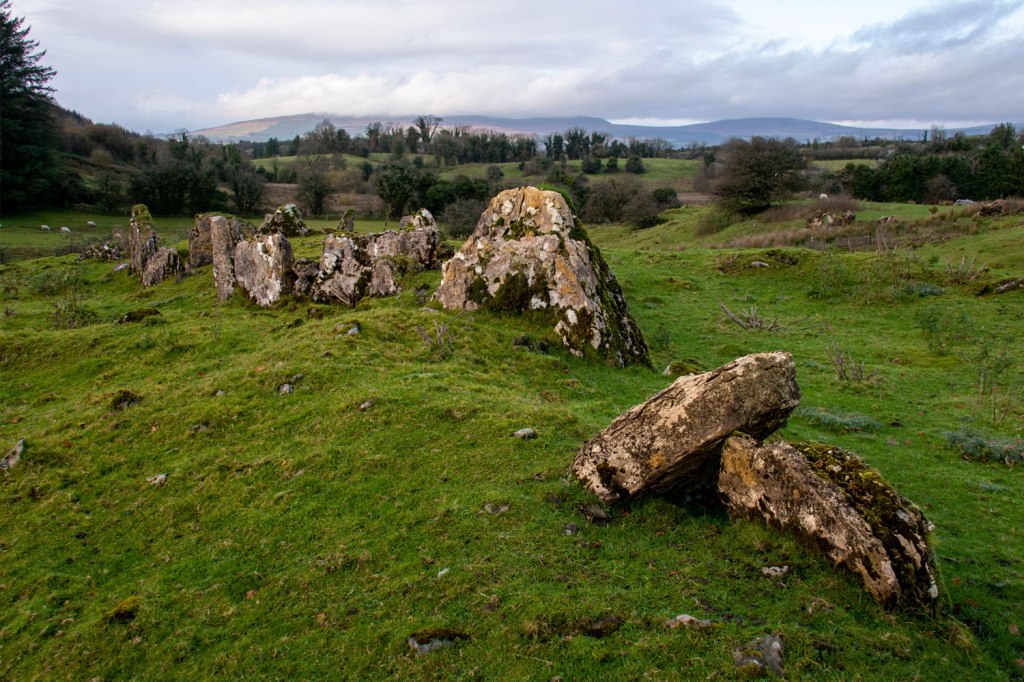


The monument lies approximately 70 metres west of the Mohill-Ballinamore road and is situated on a small hillock in rolling countryside about a quarter of a mile north of Fenagh Lough. It consists of a pair of burial galleries set back to back with a space of 2 metres between them. Both galleries are preceded by the remains of ill-defined courts.
The structures are incorporated in a large, roughly oval-shaped mount measuring 28 metres long by 22 metres wide. The original structure would have been rectangular in shape for the original cairn. Today the structure rises to a height of 1.5 metres, however, the original height would have been in excess of 3 metres high and of loose stone construction.
The Court tomb dates back to 4000 BCE. It is likely the court tomb was used for ritual or social events involving large gatherings of people. The Court Tomb is on private land and is not accessible.


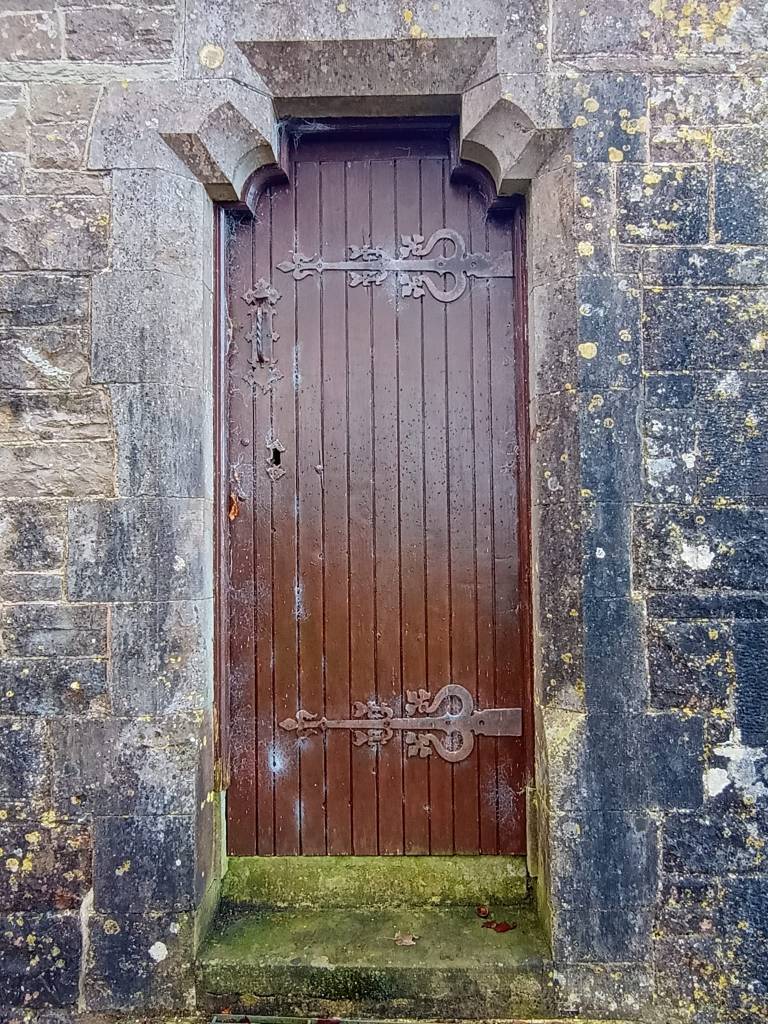
St Catherine’s Church was built between 1792 and 1802. The Church is dedicated to St. Catherine, the legendary 4th Century Saint. In the 20th century, the protestant population of Fenagh reduced in size and the church was closed from 1974 until 1988 and fell into disrepair. Thanks
to grants from the Heritage Council and the National Lottery, the Church was restored and now is host to Easter Sunday services, Winter Solstice Services and is a picturesque wedding venue.
Priests from St. Catherine’s Church would have originally stayed in the Rectory, located next door, which was built in 1827. The Old Rectory now has a new lease of life as a B&B.
There is a wonderful Peace Garden in the grounds of St. Catherine’s Church which is the perfect place to walk and reflect.
 Fenagh.com